
Organic waste no longer has to be a disposal problem. This blog explains how biogas, biomethane, and biochar convert agricultural, food, and industrial waste into clean energy, renewable fuel, and long-term carbon storage, and what this means for businesses, investors, and a circular economy.
Every day farms, factories, food processors and cities produce vast quantities of organic waste. A large part of it still ends up in landfills, decays in open fields or is burnt. This entails spending money, causes pollution of both air and water, and means that material which still contains energy and nutrients is being wasted.
Meanwhile, industries are encountering increasing energy costs and are under more pressure than ever to reduce their emissions. The positive point is that there is a single solution which can address both of these issues. Technologies such as anaerobic digestion and pyrolysis convert organic waste into biogas, biomethane, and biochar, all of which have genuine market value. The shift from disposal to resource recovery is at the core of the circular economy.
Understanding Organic Waste
Organic waste is any waste that comes from plants or animals and breaks down naturally. The main kinds of waste are farm leftovers such as rice straw and sugarcane bagasse food scraps from hotels and factories animal manure from dairy and poultry farms industry leftovers from distilleries and paper mills and city trash such, as kitchen scraps and sewage sludge.
They should be regarded as resources since they contain carbon, energy, and nutrients; if they decompose uncontrolled then that value is lost and greenhouse gases escape but if they are processed in a controlled manner the same material can be turned into fuel, power or a stable soil product and this means that disposal costs will be lower today and new income will be obtained tomorrow.
Biogas: Turning Waste into Renewable Energy
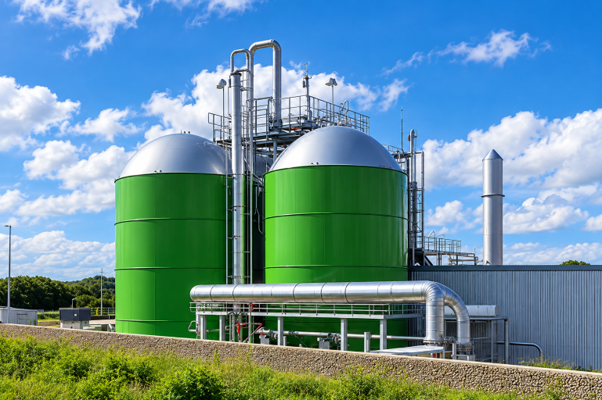
Biogas is a renewable gas consisting mainly of methane and carbon dioxide. It is formed as a result of anaerobic digestion, in which microorganisms decompose organic matter within a sealed tank that is free from oxygen. The process takes place in several stages, after which the bacteria turn the material into a gas rich in methane. The residue left behind is called digestate, a substance that is rich in nutrients and can be used as organic fertilizer
Cattle manure, poultry waste, food scraps, and distillery waste are usually used as raw materials, and a number of plants mix these together in order to maintain a steady output of gas. This gas can be used to operate boilers, produce electricity, or feed into combined heat and power systems. A dairy farm can use the manure from its own animals to run its cooling units, and a food processing plant can reduce its fuel costs by making use of its own trimmings. Those who want to see how this process works on a large scale can look at a contemporary design of a biogas plant, which illustrates the way in which organic waste is converted into useful energy. For communities, biogas also brings about less odour, cleaner groundwater, and the creation of local employment opportunities.
Biomethane: Upgrading Biogas into a High-Value Fuel
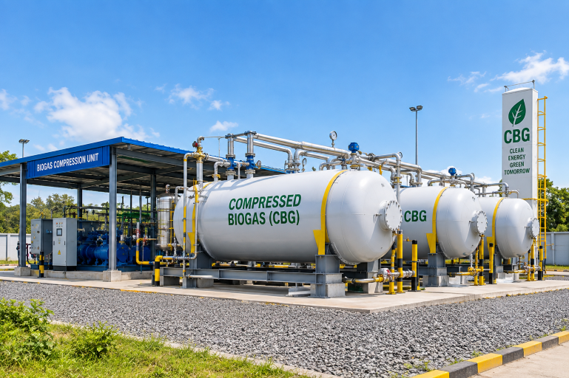
Biomethane is biogas which has been treated so that it becomes almost pure methane, the amount usually being between 90 and 97 per cent. Since raw biogas contains carbon dioxide, moisture and hydrogen sulfide, it is most useful when used close to the plant. The impurities are eliminated from biomethane, enabling it to burn more cleanly, to have a greater energy content, and allowing it to be stored and transported just like natural gas. In the upgrading process, moisture and hydrogen sulfide are removed first, after which the carbon dioxide is separated by means such as water scrubbing or membrane separation; the resulting gas can then be compressed into cylinders, usually referred to as compressed biogas, and transported by truck to customers or to fueling stations.
Biochar: Creating Long-Term Value from Biomass
Biochar is a stable, carbon-containing substance which is produced by heating biomass in the presence of only a small amount of oxygen; this process is known as pyrolysis. The dry biomass is heated to about 350 to 700 degrees Celsius within a closed reactor. As there is almost no oxygen available, the material does not catch fire. It decomposes into solid biochar, bio-oil and a combustible gas which is sometimes capable of heating the reactor itself. People who want to find out more about the equipment involved can refer to the section on how a pyrolysis plant uses controlled heating to turn biomass into useful products.
In farming biochar helps the soil to retain water and nutrients and promotes healthy microbial activity, particularly on sandy or degraded land. It is also put to use in water filtration, in construction materials and in a number of industrial processes. The major climate advantage of biochar is its stability; most of the carbon in it remains locked up for hundreds of years or longer when it is in the soil, which is the reason it is associated with carbon removal and carbon credit projects.
Comparing the Three
Biogas is the first option since it is well suited to wet materials such as manure, food waste and effluent, and its primary benefit is the production of heat and power on site. Biomethane is the superior upgrade as it converts biogas into a fuel that can be sold and competes with natural gas, although this brings in higher revenues it does so at the cost of having to invest in additional upgrading equipment. Biochar is appropriate for dry, woody materials such as crop residues, husks and wood waste and it generates income through the sale of the product and, in certain markets, also from carbon credits.
To put it simply, wet waste is turned into biogas and biomethane, dry biomass is converted into biochar, and the by-products tend to support one another. Digestate can be used in soil improvement schemes, and pyrolysis gas can provide the process heat.
Business Opportunities
The economy based on turning waste into value creates various opportunities. Businesses are able to reduce their expenses relating to disposal, transport, and energy, and they obtain extra income from electricity, compressed biogas, biochar, and organic fertiliser. They also benefit from being protected against fluctuations in fuel prices and can achieve measurable reductions in emissions by capturing methane and storing carbon using biochar. For instance, a sugar mill can use its bagasse and effluent for energy while a local farming group uses the digestate and biochar to improve its fields, thus ensuring that only a small amount of material escapes the system as waste.
The Future of Resource Recovery
Interest in waste-to-energy is increasing in Asia, Europe and North America. Renewable fuels are currently being looked at as a solution for sectors that are difficult to electrify, for example heavy transport and high-temperature industry. Biochar is now acting as a major tool for carbon removal, and improvements in digesters, gas upgrading systems and modular pyrolysis units are reducing costs and enabling smaller projects to be carried out. Integrated systems that link digestion and pyrolysis are also appearing, allowing operators to deal with a wider range of feedstock types and to obtain more value from each tonne of waste.
Industry Perspective
The success of these projects on an industrial scale is due to sound engineering, industrial solutions being developed by companies such as Kerone to advance biomass conversion, renewable energy, thermal processing, pyrolysis, and waste-to-value technologies by enabling the transformation of biomass and organic waste into valuable resources.
Conclusion
Organic waste is not any longer merely a problem to deal with; biogas converts wet waste into heat and power, biomethane refines that gas into a flexible fuel, and biochar gives dry biomass long-term value. When used together as part of an integrated approach, they enable companies to reduce their disposal costs, make money from new products, and satisfy growing environmental expectations. The necessary materials are already available, and the real issue is how quickly we start using them.
Frequently Asked Questions
1. What is the difference between biogas, biomethane, and biochar?
Biogas is a raw gas made from wet organic waste through anaerobic digestion, and it is mostly methane and carbon dioxide. Biomethane is biogas that has been cleaned and upgraded to almost pure methane so it can be used like natural gas. Biochar is a solid, carbon-rich material made by heating dry biomass without oxygen, and it is used for soil, filtration, and carbon storage.
2. How does anaerobic digestion work?
Microorganisms break down organic waste inside a sealed, oxygen-free tank in several stages. Large materials are first broken into simpler compounds, then into acids, and finally into methane and carbon dioxide, which together form biogas.
3. How is biomethane made from biogas?
Moisture and hydrogen sulphide are removed first, and then carbon dioxide is separated using methods such as water scrubbing, membrane separation, or pressure swing adsorption. The result is high-purity methane.
4. Where can biomethane be used?
Industries use it in boilers and kilns to replace natural gas, LPG, or furnace oil. It also fuels buses, trucks, and municipal fleets, and it can be used for cooking and heating in hotels and housing complexes.
5. Which feedstocks are best for biochar production?
Dry, woody, and fibrous materials work best, such as crop residues, wood waste, husks, and shells. Very wet materials like manure and food waste are better suited to biogas.
6. How does biochar help the soil?
Biochar improves soil structure, helps the soil hold water and nutrients, and supports healthy microbial life. It is especially helpful in sandy or degraded soils.
7. Does biochar really help reduce carbon emissions?
Yes. When biomass is turned into biochar, a large share of its carbon stays locked in a stable form for a very long time, often estimated at hundreds of years or more when used in soil. This is why biochar is linked with carbon removal projects and carbon credit markets.
8. How do businesses earn money from waste-to-value projects?
Income can come from selling electricity, compressed biogas, biochar, and organic fertilizer. Businesses also save on waste disposal and energy costs, and some projects may earn carbon credits depending on the market and standards followed.
9. Can biogas and biochar systems work together?
Yes. Wet waste can go to a biogas plant while dry biomass goes to a pyrolysis unit, and their by-products can support each other. Digestate can feed soil programs, and pyrolysis gas can supply process heat.
10. Is a waste-to-energy project suitable for small and mid-sized businesses?
In many cases, yes. Better digester designs, upgrading systems, and modular pyrolysis units are lowering costs and making smaller projects practical. The right size depends on how much feedstock is available nearby and what the business plans to do with the energy or products.