
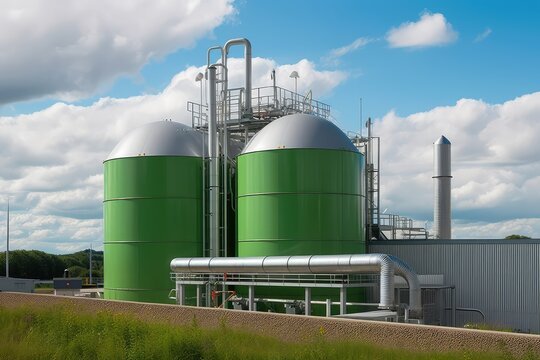
Kerone Engineering Solutions Ltd. is a pioneer in the design, construction, and manufacturing of modern biogas plants. We have a strong commitment to environmental sustainability and are experts in harnessing the power of organic waste to produce pure, sustainable biogas. Our biogas plants efficiently convert a range of organic feedstock materials, such as agricultural leftovers, food waste, and sewage sludge, into useable biogas and nutrient-rich digestate using cutting-edge anaerobic digestion technology.
The innovative installations known as biogas plants, often referred to as anaerobic digestion facilities, are created to harness the power of organic waste to produce renewable energy while simultaneously managing trash disposal. These facilities use anaerobic digestion, a biological process that breaks down organic wastes including animal dung, food waste, and agricultural residues when there is no oxygen present. Biogas, a mixture largely made up of methane and carbon dioxide, is produced as a result of this decomposition and can be used as a clean, long-lasting energy source.
The two primary components of a biogas plant are a digester, which is where anaerobic digestion takes place, and a gas storage system, which is used to gather and store the produced biogas. Microorganisms in the digester, which is typically a big, airtight container, break down the organic material there. Both biogas and nutrient-rich digestate are produced by this process. Numerous uses for the biogas exist, including the generation of electricity, space heating, and vehicle fuel. To enhance energy production, some biogas plants include combined heat and power (CHP) systems, which collect and use the heat generated during the methane combustion process. This increases total energy efficiency.
In addition to its benefits for energy, the production of biogas has a number of positive environmental effects. It helps to reduce greenhouse gas emissions by capturing methane, a potent greenhouse gas that would otherwise be released into the environment through natural decomposition processes. In addition to boosting sustainable agriculture and reducing the need for chemical fertilizers, digestate, a byproduct of biogas production, can be used as a nutrient-rich organic fertilizer.