
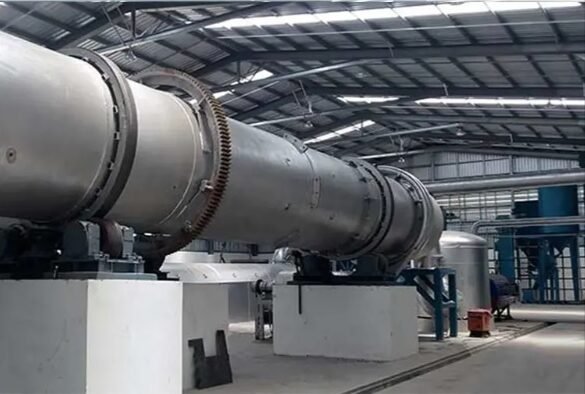
The features of long rod biomass, such as logs, wood, sawdust, and jute rods, are the foundation of the Kerone Horizontal Biomass Dry Distillation Carbonization Furnace. It utilizes a horizontal structure, manual charging, cart feeding and dumping, as well as cutting-edge hot air dry distillation. The carbonization process technology uses a special carbonization combustible gas back-burning technique so that the flue gas produced during carbonization can be fully used to satisfy the furnace’s own heat requirements, significantly increasing the carbonization rate. The rate of carbonization is raised from 80% to 95%. It has a high production efficiency, is safe to use, environmentally beneficial, and can conserve a lot of energy. It is the best device for carbonizing biomass with long rods. Combining several units, carbonized combustible petrol is utilised in series, reducing fuel consumption and boosting business productivity.
The carbonization liner, thermal insulating layer, furnace door, feeding car (small size not configured), combustible gas return combustion pipe, dehumidification buffer tank, burner, smoke exhaust pipe and thermometer are all parts of the Kerone horizontal biomass dry distillation carbonization furnace. Contains, among other things, a pre-burning gasifier and a flue gas purification system. The furnace uses the anaerobic dry distillation principle to take volatile compounds out of biomass in order to carbonize it. The charging and sealing furnace is used to stack the raw biomass materials to be carbonized, move them into the carbonization furnace, seal the cover and lock the furnace door; -250 °C, processing takes 4–12 hours (the precise heating time is based on the raw material’s moisture content, density, diameter, and furnace size), and moisture and air from the liner are released; without oxygen carbonization.
The inner tank temperature is maintained at 300-500 ° C for 2.0-3.5 hours (depending on the density and diameter of the carbonized material), at which point the tube starts to emit a faint yellow smoke (combustible gas), signaling the start of carbonization. The carbonization depth requirements and the size of the furnace determine the specific temperature and carbonization time.
Open the cover and release the charcoal when the temperature is below 50°C. This sort of furnace takes 5.0-15.5 hours to fully heat and carbonize, and 1-2 furnaces can be finished in a day. The dust collector processes the exhaust flue gas to ensure that the emission standards are met. As many as three to five carbonization furnaces are utilised simultaneously, and the peak carbonization can be utilised to maximize the amount of combustible gas used to heat the carbonization furnace and minimize the amount of wood fuel consumed.