
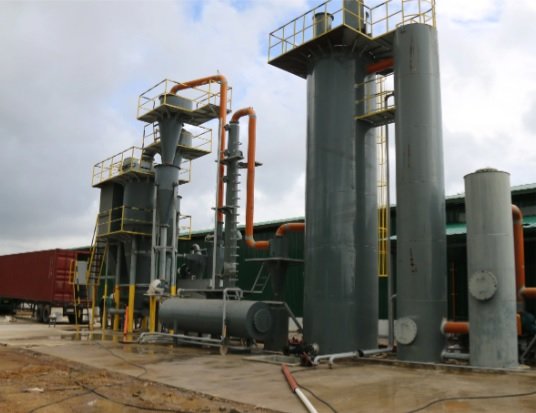
Biomass Gasification

Biomass Gasification

Kerone Engineering Solutions Ltd. has been a trailblazing leader in the field of sustainable energy, dedicated to revolutionizing how the world is powered. Our company, which is uncompromising in its commitment to energy independence and sustainability, specializes in the design, construction, and manufacturing of modern biofuel production facilities. By leveraging cutting-edge technologies and a variety of feedstock sources, including agricultural crops, waste materials, and algae, we contribute significantly to the reduction of greenhouse gas emissions and the advancement of a cleaner energy environment.

Biomass gasification is a process that converts biomass materials, such as wood chips, agricultural residues, or energy crops, into a combustible gas known as syngas (synthetic gas). The syngas is primarily composed of carbon monoxide (CO), hydrogen (H2), carbon dioxide (CO2), methane (CH4), and other trace gases.

The gasification process involves exposing the biomass feedstock to high temperatures (typically between 700°C and 1,200°C) in a controlled oxygen-starved environment. The absence of oxygen prevents the biomass from burning completely and instead promotes the partial combustion or thermochemical conversion of the organic matter.

Main Process

The internal combustion engine, external combustion engine, steam turbine, and ORC system power generation processes make up the bulk of Kerone’s biomass gasification power generation system. In order to ensure that the combustible gas entering the engine is clean and can extend the service life and frequency of maintenance of the engine, it is necessary to perform a gas purification before entering the generator because biomass gas is a mixed gas that contains mixed impurities like wood tar, wood vinegar and a small amount of ash.

Biomass Gasification Main Types

Kerone uses a fixed bed suction form of biomass gasification. This system has the benefits of steady gas production, reliable operation, and continuity. It is frequently applied in industrial settings. This system’s gasification temperature ranges from 750 to 850 degrees Celsius. CO, CH4, H2, and N2 are the flammable mixed gases created, whereas CH4 and H2 are the other inflammable gas. The gasification efficiency is greater than 75%, and a yield of 3-5% biochar is possible. If there are particular requirements, the biochar production ratio can be adjusted once more.

Application of Biomass Gasification
  • Electricity Generation
  • Heat Production
  • Combined Heat and Power (CHP)
  • Chemical Production
  • Fuel Production
  • Waste Management
  • Carbon Capture and Storage (CCS)
  • Rural Electrification
  • Sustainable Agriculture
  • Hydrogen Production
  • Remote Power Supply
  • Decentralized Energy Systems
  • Carbon Footprint Reduction
Features of Biomass Gasification
  • Renewable Energy Source
  • Reduction of Waste
  • Production of Syngas
  • Lower Greenhouse Gas Emissions
  • Versatile Feedstock
  • Energy Efficiency
  • Flexibility in Feedstock
  • Carbon Neutrality
  • Economic Benefits
  • Technological Advancements
  • Environmental Impact
  • Flexible Energy Outputs
  • Scalable Technology
  • Potential for Integration
  • Byproduct Management
Advantages of Biomass Gasification
  • Decentralized Power Generation
  • Reduction of Methane Emissions
  • Renewable Energy Source
  • Reduction in Waste
  • Lower Greenhouse Gas Emissions
  • Energy Efficiency
  • Versatile Feedstock
  • Local Energy Production
  • Reduced Landfill Use
  • Flexibility in Energy Products
  • Economic Benefits
  • Sustainable Agriculture
  • Carbon Neutral
  • Co-Product Generation

Kerone Biochar