
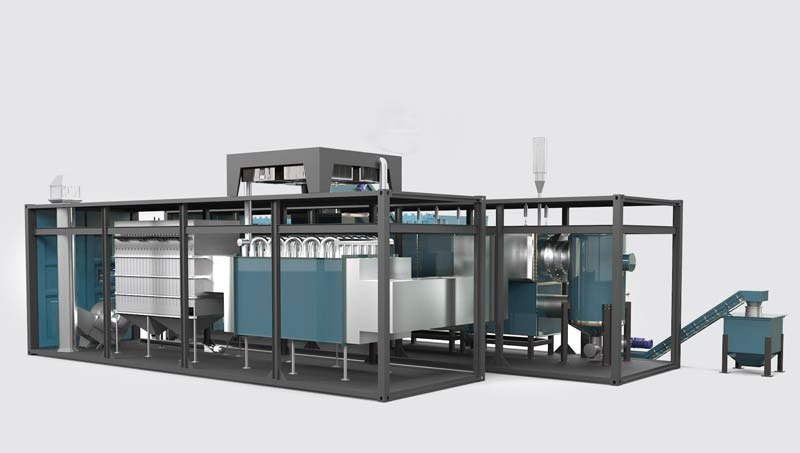
Biomass Carbonization System

Biomass Carbonization System

Kerone Engineering Solutions Ltd. has been a trailblazing leader in the field of sustainable energy, dedicated to revolutionizing how the world is powered. Our company, which is uncompromising in its commitment to energy independence and sustainability, specializes in the design, construction, and manufacturing of modern biofuel production facilities. By leveraging cutting-edge technologies and a variety of feedstock sources, including agricultural crops, waste materials, and algae, we contribute significantly to the reduction of greenhouse gas emissions and the advancement of a cleaner energy environment.

Equipment that can turn biomass waste into biomass charcoal at high temperatures is referred to as a “biomass carbonization plant.” One piece of Kerone equipment is the de-dusting system. The gas in the carbonization process can be cleaned up by the de-dusting system. At the end of the day, this mechanism recycles biomass without harming the environment. These days, a lot of clients think purchasing this kind of equipment is profitable.

What is biomass carbonization?

We can utilize wood chips, coconut shells, rice husks, plant stalks, shells, and other materials as raw materials to create charcoal through the process of “high temperature pyrolysis gases and vapors, sulphur emissions, carbon concentration.”

For making barbeque charcoal or hookah charcoal, biomass carbonization plants can be employed. Additionally, it may be transformed into activated carbon or utilised as fuel. Additionally, it can be applied as a biological carbon fertiliser to enhance soil quality.

We have created the continuous biomass carbonization system to transform different types of biomass into valuable charcoal resources. Likewise, sewage sludge and municipal solid waste can be carbonized using a biomass carbonization equipment.

Purpose of Biomass Carbonization

  • Agriculture- It is utilised to create biochar, which is useful in agriculture. The soil’s quality is raised with the help of biochar.
  • Industry- It is used to manufacture charcoal used in power plants, cement plants, brick plants, and boiler plants. A good alternative fuel is charcoal.
  • Ship- It is used to create biomass charcoal, a useful fuel for heating.
  • Cooking- The final charcoal produced by biomass carbonization can be used for both grilling and cooking.
  • Shisha/Hookah- Charcoal for hookahs and shisha can be made from the carbonization’s byproducts.

Product

  • Rice Husk Carbon
  • Coconut Shell Carbon
  • Sawdust Carbon
  • Sludge Carbon
  • Carbon Bar
  • Carbon Briquettes
Application of Biomass Carbonization System
  • Renewable Energy Generation
  • Soil Enrichment and Agriculture
  • Environmental Restoration
  • Carbon Sequestration and Climate Change Mitigation
  • Waste Management
  • Industrial Applications
  • Sustainable Land Use Practices
  • Energy Independence and Rural Development
  • Research and Innovation
Features of Biomass Carbonization System
  • Advanced Control Systems
  • Secondary Air Injection
  • Refractory Materials
  • Automated Cleaning Mechanisms
  • Modulation Capability
  • Quality Fuel Monitoring
  • Efficient Ash Removal
Advantages of Biomass Carbonization System
  • It has a double-layer design so that the machine’s lower portion can have as much contact with the hot air as feasible. The efficiency of heat utilization can be increased because of this design.
  • In the carbonization machine, a unique “two-step method of fire” is used. In order to lower the water content of biomass, we fully utilize the waste heat and smoke. More than 90% of a calorific fuel’s capacity can be used. We only need to figure out the cost of carbonization in this situation. This structure is absent from the conventional machine.
  • Weย design our machine’s hot air source system based on the customer’s preferred affordable local fuel source. Realizing the full potential of various fuel sources like carbon, coal, biomass, combustible gas, and waste, among others. The carbonization machine can lower costs and create a positive feedback loop in this way.
  • During the carbonization process, we only employ one hot air source system. As we are all aware, adding a hot air source system entails adding a step and raising the cost of labor, fuel, and energy. Therefore, utilizing a single hot air source system can also help lower fuel costs.

Kerone Biochar