
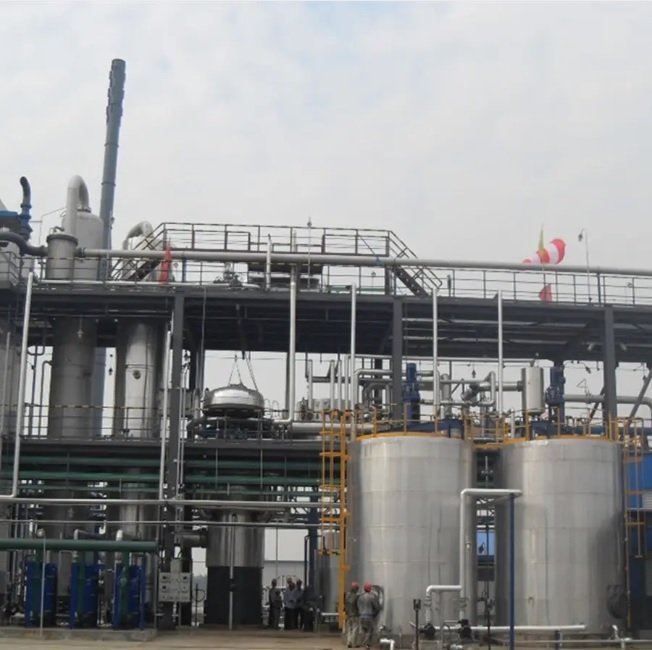
Kerone Engineering Solutions Ltd., an advanced bioethanol plant manufacturing company, is dedicated to transforming the energy sector with green solutions. We are consistent in our commitment to energy efficiency and sustainability as we concentrate on the manufacture, development, and use of bioethanol plant as a clean and renewable energy source. Our modern facilities make use of contemporary technology to create high-quality bioethanol from a range of feedstocks, including non-food sources and agricultural crops.
The advancement of bioethanol technology, also known as the production of ethanol from biomass, is critical for the creation of sustainable energy sources as well as for the global initiative to reduce greenhouse gas emissions and combat climate change. This method is based on the biochemical conversion of organic materials—typically plant-based feedstocks like corn, sugarcane, or cellulosic materials—into ethanol.
The identification and preparation of acceptable feedstocks is the initial step in the synthesis of bioethanol. Due to their high sugar and starch content, corn and sugarcane are among the most often utilized feedstocks; however, lignocellulose materials, such as wood chips and agricultural leftovers, offer a wider variety of possibilities. These feedstocks go through a variety of pretreatment procedures to decompose complicated carbs into easier-to-digest sugars.
The development of second-generation bioethanol production, which makes use of non-food feedstocks such agricultural leftovers, algae, and specialized energy crops, is the result of advances in bioethanol technology. With this strategy, the rivalry for food resources is reduced, and the production of bioethanol is made more sustainable and energy-efficient.